
U.S. Supreme Court Oral Arguments on Mail-In Ballots: The Case That Could Reshape American Elections
The Supreme Court heard arguments that could determine whether 30 states can continue accepting mail-in ballots after Election Day. Full transcript and analysis inside.
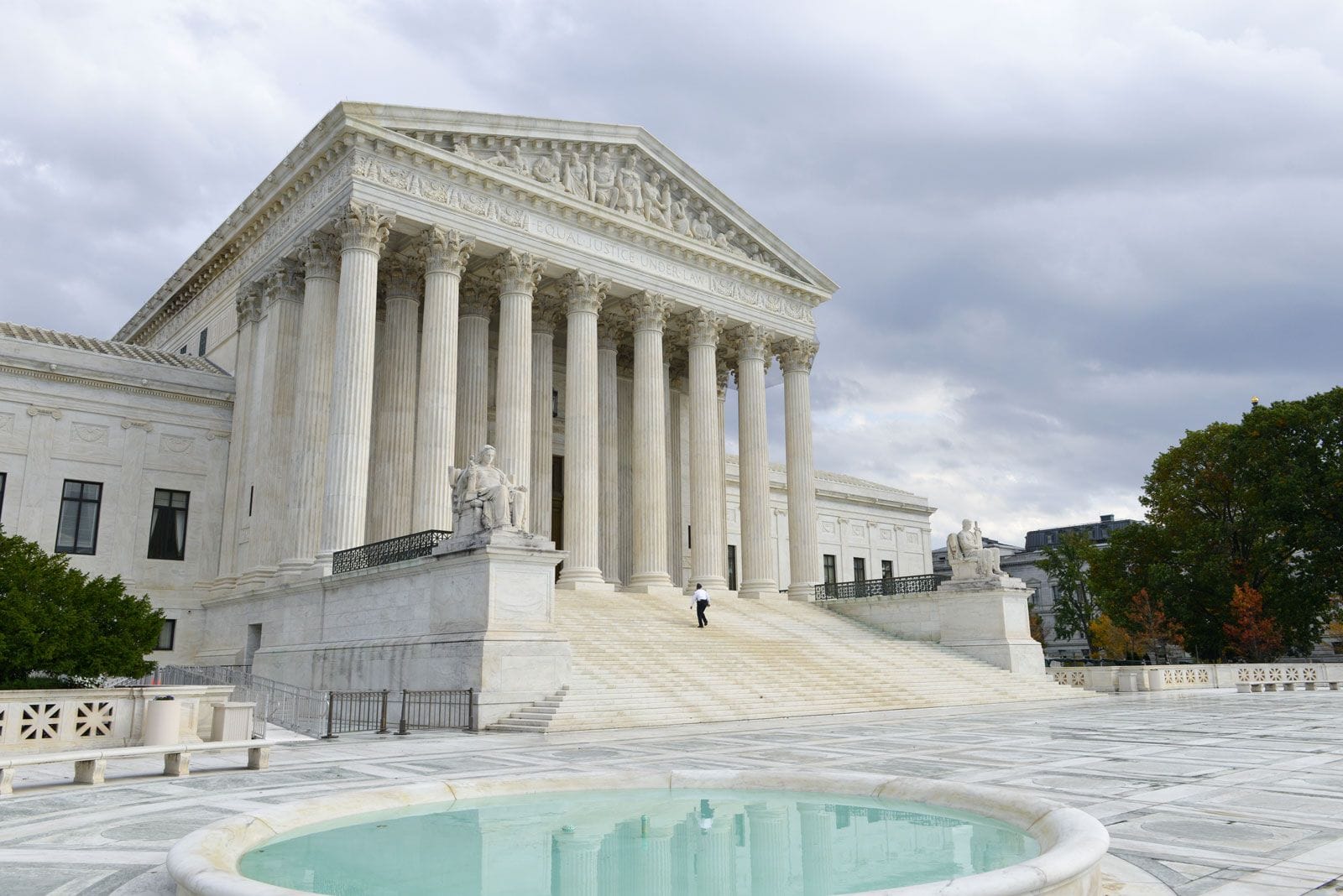
The U.S. Supreme Court heard oral arguments in a landmark case that could reshape how America votes. At stake: whether the 30 states that currently accept mail-in ballots after Election Day can continue to do so, or whether a 180-year-old federal statute requires all ballots to be received by the polls close. The justices sparred with attorneys over historical precedent, constitutional authority, and the very definition of what "Election Day" means. Below is our analysis of the key arguments, followed by the full cleaned transcript.
Historical Context of Election Day
The attorney for Mississippi argued that states have evolved voting practices over 180 years, from in-person voting with public challenges to absentee ballots and secret ballots. Congress, by setting federal Election Day, did not block these changes but respected them. "States have allowed [post-Election Day ballot receipt] for over a century. Congress has respected it. No one challenged it until now," the attorney emphasized.
"If Election Day must be what it was in 1845, that takes out much more than the ballot receipt laws of 30 states today. It dooms absentee voting, modern methods of voting, the secret ballot, and more."
The Core Legal Question: What "Election Day" Means
Central to the argument is whether Congress intended Election Day to be a strict deadline for ballot submission or merely a final day for collective voter choice. The attorney clarified: "The Election Day statutes adopt a simple rule. States must make a final choice of officers by Election Day. That is the plain meaning of an election."
Justice Thomas pressed for clarity: "Sometimes you said the choice has to be made by Election Day, and at other points you say on Election Day, which is it?" The attorney responded: "I think the statewide choice needs to be made by or on Election Day itself when the entire electorate has voted."
Mail-in Ballots and the Common Carrier Principle
The attorney defended Mississippi’s mail-in ballot rules, arguing that submitting ballots via U.S. mail or common carriers (like FedEx) satisfies Election Day requirements because it constitutes "final submission" through a trusted, regulated channel. "When you put something through the postal service, it's final, it's trusted, it's not like giving it to a non-official third party," the attorney stated.
Justice Barrett questioned whether states could designate other entities, like notaries or party operatives, to receive ballots: "What if a state says, 'A notary can be the official receiver?'" The attorney countered: "The key is submission to the state. A notary could be sufficient if the state designates it as official, but the federal law doesn't require that."
Federal Precedent and Historical Consistency
The attorney highlighted Congress’s consistent recognition of post-Election Day ballot receipt over 100 years, citing the Uniformed and Overseas Citizens Absentee Voting Act (UOCAVA) and the Soldier Voting Act. "Congress was told that about a dozen states had post-Election Day ballot receipt laws. It respected those explicitly as to a deadline," the attorney noted.
This historical practice, the attorney argued, proves Congress never intended to block such state laws: "Congress not only knew this was going on, but interpreted and incorporated the states' own post-election-day ballot deadlines into federal law."
Addressing Hypotheticals and Line-Drawing
Justices explored hypotheticals about ballot recall and delivery methods. Justice Gorsuch posed a scenario where a candidate’s scandal prompts voters to recall mail-in ballots: "In that hypothetical, did the election happen on election day?" The attorney firmly replied: "Yes, Your Honor. The election happened on election day. Ballot recall is unlawful under Mississippi law."
When Justice Alito noted the complexity of "line-drawing" for mail-in deadlines, the attorney concluded: "The best way to read [Election Day] is that Congress set the final choice day. That’s the key thing, final choice day."
The Core Debate: What Does "Election Day" Really Mean?
The Supreme Court grappled with a fundamental question during oral arguments: Does the federal statute setting "Election Day" require ballots to be received by that date, or can states accept mail-in ballots days or weeks later? Attorneys for Mississippi argued states have broad authority to set ballot receipt deadlines, while the federal government countered that Congress intended Election Day to be the final date for ballot receipt to prevent fraud and ensure election integrity.
The one constant is that the voters make a final choice of officers by election day.
This principle, emphasized by counsel, became central to the argument. The attorney argued that historical voting practices—such as requiring ballots to arrive by Election Day during the Civil War and World War II—demonstrate Congress intended a single, unified deadline. "Congress set the final choice day," the attorney stated, explaining that the statute's purpose was to prevent states from making final choices at different times, which could create "distortions, fraud, or risks."
Historical Context: Congress's Intent vs. State Authority
Attorneys for Mississippi cited historical practices, but the government countered that Congress has consistently allowed states flexibility in ballot receipt. "Congress has been very dynamic," counsel explained, noting that "as soon as Congress had a reason to alter the methods by which a choice was made, it did so." The key historical point: "Since Congress said... throughout our history... our country has been very dynamic."
The attorney also dismissed concerns about post-Election Day ballots causing "appearance of fraud," stating: "I think it's notable that my friends with the United States... haven't cited a single example of fraud from post-election ballot receipt." He added that the military absentee voting history—permitting ballots to arrive long after Election Day since the Civil War—further supports state flexibility.
Addressing Fraud Concerns and Policy Questions
Justice Kavanaugh pressed whether late ballots risk destabilizing results if the "apparent winner" flips due to delayed counts. The attorney acknowledged the "perception" of risk but stressed there was "no good evidence that Congress was doing that beyond preventing double voting." He argued Congress intended a simple rule: "Everybody must cast their ballot by Election Day" for administrative clarity.
Justice Barrett challenged the definition of "finality," asking whether absentee ballots sent early but received late would violate Election Day rules. The attorney clarified: "A state has to do whatever it would need to do to guarantee that on Election Day all ballots... are final and cannot be recalled."
Why History Matters (and Doesn't)
The government emphasized that historical evidence from the 1845 federal statute—which established Election Day—is decisive, not modern practices. "1845 is the key date," counsel stated. He rejected the idea that Congress intended Election Day to mirror historical ballot receipt practices, noting: "The point of the history and tradition test was to try to evaluate the contours of that right." In this case, "Congress was not trying to define a preexisting right; it was setting a deadline."
When Justice Jackson questioned the relevance of the 2022 Electoral Count Reform Act, counsel replied: "Congress carried over in 2022 the same understanding of Election Day that had persisted throughout." The core message: "States could very reasonably say... we do want to get counting and get a result very fast, but we are concerned about these military voters."
The Bottom Line: States Have the Final Say
The attorney concluded that the Constitution allocates election authority to states and Congress, not the courts. "The states and Congress," he stated, "not the courts" should decide ballot receipt rules. "Absent a law in federal law that suggests that absentee ballots must be received by a certain time," he added, "there's no explicit requirement of that." The case ultimately hinges on whether Congress "wall[ed] off states from debating these policy points." The attorney firmly believed it did not.
Historical Precedent: Civil War Voting Practices Inform Modern Election Law
The Supreme Court heard arguments about whether states can count mail-in ballots received after Election Day, with attorneys emphasizing a critical historical precedent: during the Civil War, states required ballots to be received by Election Day, not just cast. This practice, applied across five states using proxy voting and a dozen states using field voting, demonstrates that "Election Day" has always included both casting and receiving ballots within that timeframe.
Every one of those five states required the votes, the ballots to be received by election officials back home by Election Day. That's an incredibly inconvenient thing, and I think that's a very important thing that was done in the Civil War to ensure the ballots were received by Election Day.
Defining "Election Day" in Federal Law
Mr. Clement, representing Mississippi, argued that "Election Day" refers to the moment ballots are received into official custody—not merely cast. He contended that Congress intended this standard when it established federal election deadlines, citing historical consistency: "no state says that you don't have to have a receipt, ballot receipt deadline at all." He emphasized that Mississippi's five-day deadline for receipt (not submission) creates a clear "November 11th problem" where ballots arriving after that period are destroyed as nullities.
Military Voting and the 1942 Soldier Voting Act
The argument addressed military absentee voting, with Mr. Clement stating the 1942 Soldier Voting Act supports his position: "the special military ballot had to come in by the time the polls closed on Election Day." He dismissed concerns about disenfranchisement, noting Mississippi has specific provisions for overseas voters, including email ballot options. "The concern should really be the heartland cases," he asserted, highlighting that eight states don't require postmarks at all.
Rebutting the 2022 Electoral Reform Act
Justice Kagan questioned whether Congress's 2022 Electoral Count Reform Act, which mentions "a period of voting," undermines Mississippi's position. Mr. Clement countered that the law assumes a baseline of Election Day as a fixed date: "The exception for force majeure events assumes a baseline of a period of voting." He stressed that early voting—distinct from late receipt—has "a different history" and was never challenged in the case. "We're not taking issue with early voting," he clarified. "The practice of early voting has a distinct history."
The Core Legal Distinction
The central tension revolves around whether "Election Day" means the day votes are cast or the day they're received. Mr. Clement argued that the Civil War precedent proves states always treated receipt as part of Election Day: "Even at a time of great national emergency, every one of the states insisted that the ballots be received into official custody by election day." He warned that allowing late receipt would fundamentally alter the meaning of "Election Day," a phrase used for holidays like Labor Day and Independence Day to denote specific dates, not flexible periods.
Supreme Court Weighs Mail-In Ballot Deadline Law in Landmark Case
The U.S. Supreme Court convened for a pivotal oral argument on Mississippi's restrictive mail-in ballot law, which requires all ballots to be received by election officials by Election Day. With 30 states permitting early ballot receipt, the case could redefine voting accessibility across the country. The justices grappled with whether Congress's 1845 election statute—requiring votes to be "cast" on Election Day—prohibits post-Election Day ballot processing.
The "Consummation" Theory at the Core
Mississippi's legal team argued their law aligns with a Supreme Court precedent in Foster v. Love, which required ballots to be "consummated" by Election Day. "These things have to be rejected. They have to be consummated by election day," emphasized Mississippi's attorney. The court pressed whether this interpretation would invalidate all 30 states' early voting systems, to which the state countered that historical practice distinguishes their law.
The problem is it all happened a month too early. That's where the theory comes from. It's the word that this court used in Foster against Love.
Historical Practice vs. Modern Voting
Justice Kavanaugh highlighted a striking historical gap: no state enacted ballot receipt deadlines outside Election Day from 1845 to 1914. "There is no example of a state having a ballot receipt deadline other than by Election Day," the attorney noted. However, the court questioned whether this reflected legal understanding or simply "good policy."
It would no longer be an election or an Election Day if it could take place... if ballot receipt could take place some other time.
Early Voting's Distinct Historical Footing
The justices explored why early voting remains legally acceptable while mail-in deadlines are contested. Mississippi's lawyer acknowledged early voting's "distinct historical pedigree," citing Civil War-era practices and three federal court rulings affirming its legitimacy. "Early voting has two things in favor of it: a distinct historical pedigree and... courts of appeals who addressed this," he explained.
Slippery Slope and Election Integrity
Justice Gorsuch raised a critical concern: if states can permit late ballot receipt, "it's a huge slippery slope problem." The attorney countered that requiring official receipt by Election Day prevents "real or perceived fraud" that could undermine public confidence. "If you have an election and the election is going to turn on late arriving ballots... the losers are not going to accept that result. Full stop."
Official receipt is at the definitional heart of election. Every source from the 1840s onward treats official receipt as essential to an election.
The Historical Argument: 19th Century vs. Modern Practices
The core dispute centers on whether federal election statutes require mail-in ballots to be received by Election Day, with attorneys arguing over the historical meaning of "election day" versus modern voting practices. Mississippi defends its mail-in ballot deadlines, while the federal government contends that Congress intended Election Day to be the deadline for ballot receipt, not casting.
Justice Thomas: "All ballots have to be received and the ballot box has to close on election day. The ballot box has to be closed on election day."
Legal Precedents and Historical Consensus
Attorneys cited 11 historical cases, three treatises, and five dictionaries to argue that "casting and receipt" were universally required for voting in the 19th century. The federal government emphasized that even in Civil War-era absentee voting for soldiers, states made "herculean efforts" to ensure ballots were received on Election Day, not just cast earlier.
Mr. Stewart countered that historical sources were misinterpreted: "The key point to recognize is that ballot receipt was not possible in the 19th century without somebody showing up in person and undergoing an on-the-spot qualifications check." He argued that the requirement for in-person receipt was tied to the era's voting method, not a legal mandate that applies today.
Modern Practices and Congressional Intent
Mississippi's counsel acknowledged that modern states widely allow mail-in ballots arriving after Election Day, noting Congress has never objected to such practices. "Congress has not indicated, at least thus far, that it intended ever to preempt this," he stated, questioning why 19th-century interpretations should override current norms.
Mr. Clement defended the historical approach: "Congress was very concerned when it passed these statutes... about the exact thing that Mississippi's... would allow, which is staggered ballot receipt deadlines." The federal government maintained that original public meaning governs, regardless of modern state experiments.
Rebuttal: Federalism and Textualism
Mr. Stewart concluded by framing the case as a federalism issue: "Did Congress in 1845 block states from adopting a practice that no one had wide reason to consider at the time? Congress wasn't thinking about it. It didn't decide that." He urged the Court to reject historical arguments that would prevent states from adapting voting methods.
"The best way to resolve this case is to come back to the text, history, and precedent," he asserted. "This is ultimately a federalism case... Congress didn't wall states off from doing that." The federal government requested the Court reverse the Fifth Circuit's ruling to allow states flexibility in mail-in ballot deadlines.
Full Transcript: U.S. Supreme Court Oral Arguments on Mail-In Ballots
The following is the complete cleaned transcript of the oral arguments. This transcript has been processed for readability — filler words removed, sentences properly structured — while preserving the full substance of every argument made before the Court.
Over time, everyone voted in person. There was no absentee voting. There was no secret ballot. Voters challenged each other's qualifications at the polls on Election Day. States received ballots on Election Day. Over time, states changed all those practices as Congress extended Election Day to all federal offices. These changes have been respected since then. No one claims Congress blocked most of these changes when setting federal Election Day. The dispute is whether Congress blocked just one change: allowing ballots cast by Election Day to be received after that day. States have allowed this for over a century. Congress has respected it. No one challenged it until now. The question is whether Congress in 1845 blocked this practice. The answer is no. The Election Day statutes adopt a simple rule: states must make a final choice of officers by Election Day. This is the plain meaning of an election, not merely a matter of time. In 1845, the state appointed a new person in the state of Wisconsin to elect an officer in the state of Minnesota. The state’s opposition to the election is the same as any other state in Minnesota. From time immemorial, an election to public office has been a point of substance no more and no less than the expression by qualified electors of their choice of candidates. Mississippi satisfies that rule by making a choice on Election Day. Only this rule respects the last 180 years of state lawmaking. If Election Day must be what it was in 1845, it would eliminate much more than the ballot receipt laws of 30 states today. It would doom absentee voting, modern voting methods, the secret ballot, and more. Congress did not adopt this destabilizing view when it simply set Election Day. The Fifth Circuit was wrong to rule otherwise. This Court should reverse.
The counsel clarified that the statewide choice must be made by or on Election Day itself, when the entire electorate has voted. Voters must make their individual selections by Election Day. If a voter gives a mail-in ballot to a neighbor, that is a choice but not a final choice recognized in an election. A choice is final when submitted to the appropriate state election official through the designated state process. The final, formalized electoral decision is not made until submission to the official. The choice is made once voters as a whole have made an irrevocable decision by casting ballots. Submission to the state through the proper channel is required for finality. If a ballot is given to a neighbor, it is not final within the official state process. The ballot becomes final when submitted through mail to the appropriate election official. The election day is the day by which a final electorate-wide choice must be made. Individual selections can occur before that day, but the final collective choice must happen on Election Day. There is no limit to how early people may vote, as elections involve a long process weeks or months before the day. Federal election day statutes do not limit how early ballots may be cast, only that the final choice must be made by Election Day.
Mississippi’s rule requires ballots to be deposited with the USPS or a common carrier. The counsel explained that submission to a common carrier differs from submission to a relative or neighbor. Common carriers are impartial third parties with a duty to deliver without altering ballots. The history of mail-in voting shows that post-Election Day ballot receipt has been understood for almost as long as mail-in voting has existed. States have consistently allowed ballots to be received after Election Day, and Congress has respected this practice. Federal statutes like UOCAVA incorporate states’ post-Election Day ballot deadlines, indicating Congress knew about and approved of this practice. The Soldier Voting Act in the 1940s also recognized state deadlines. These examples show Congress intended to allow states flexibility on ballot receipt dates. There is no federal law explicitly prohibiting post-Election Day receipt. States have discretion to set their own deadlines for receiving ballots. Federal election day statutes do not require states to count ballots at all or set specific deadlines for receipt.
The counsel addressed a hypothetical about ballot recall. If a candidate’s misconduct causes voters to recall ballots after Election Day, the election would still be considered to have occurred on Election Day under Mississippi law. Ballots are final when cast under Mississippi statute, and recall is not permitted. The statute states that absentee ballots are final when marked accepted, but the counsel argued this refers to processing, not the timing of finality. The key point is that ballots are final when cast, not when accepted by officials. The counsel acknowledged that states can choose when the final vote is counted, as long as it is by Election Day. States have discretion over counting, and federal law does not preempt this. The counsel emphasized that the phrase "Election Day" refers to the final choice day, not the day ballots must be submitted. The key is that the electorate must have made a final choice by that day, even if ballots are received later. The Court’s focus should be on whether Congress intended to block states from setting their own receipt deadlines, which it did not.
We're moving in this direction, we don't have Election Day anymore. We have Election Month, or we have Election Months. The early voting can start a month before the election. The ballots can be received a month after the election.
I think that's a good point. The ballots can be received a month after the election. I think the best way to read it, Your Honor, is that by setting Election Day, Congress set the final choice day. That's the key thing, final choice day. What Congress was concerned about at the time was some states making final choices a month before other states were making final choices, and the distortions, the fraud, the risks that had.
When everybody makes a final choice on the same day, even if some individual choices are made before then, you're honoring the statutes. I think just so literally, you made this observation, not a lot to go on because the statutes are just not very prolix. I think that's a point in favor of deference to the states. If Congress has not spoken to something, especially in this context where states are expressly empowered to regulate these things, that's a big point in favor of letting states continue to do so as they have for a century.
I think it's legitimate for us to take into account Congress's desire in passing the Election Day statutes for the purpose of combating fraud or the appearance of fraud. Some briefs have argued that confidence in election outcomes can be seriously undermined if the apparent outcome on the day after polls close is radically flipped by the acceptance later of a big stash of ballots that flip the election.
I think the best way to do it is to honor the statutes' purpose by respecting the statutes technically. I think it's a good idea to do it in a way that respects the context and animating context of what these statutes were getting at. They were not addressing fraud writ large in all elections, which no statute could do. They were addressing a situation where State One votes on one day and ends its election, and State Two neighboring has its election three weeks later. The concern would be State One goes for one party and State Three goes for the other party with a huge turnout, potentially creating fraud or the appearance of fraud, like people saying, "They voted for that person, huge turnout."
I think that's the kind of thing that animated those statutes. Fraud writ large was not the example. It's notable that my friends with the United States haven't cited a single example of fraud from post-election ballot receipt. Thank you.
Justice Alito asked about the history of voter recall in the mails in Mississippi. The law doesn't permit it, but has there been any history of it? None that I've ever heard of. This wasn't raised until the appellate reply briefs, and nobody cited a single example in history.
The Constitution thus gives states the issue of elections unless superseded by Congress. Correct. If there is a policy question, the entities to decide that are the states and Congress, not the courts. Correct.
Absent a federal law requiring absentee ballots to be received by a certain time, there's no explicit requirement. Not even implicit. The military acts since World War Two at least, and the Civil War, have permitted absentee ballots to be received long past Election Day. We have a very long history of that.
The people who should decide this issue are not the courts but Congress. Correct. I think the states and Congress. The structure of our system is states go first; if Congress doesn't like it, it overrides. As Justice Scalia said in Arizona v. Intertribal, we respect what Congress said as far as it went but no farther. That's the history of voting and election law in the country.
Justice Sotomayor asked about history. History is informative of what Congress permitted. We're looking for what understanding Congress had with respect to elections. Correct. It doesn't talk about receipt of absentee ballots after elections at all. So we look to the history of whether Congress has accepted it.
The attempt by some Amici to rely on history to say it tells us how elections must be held and on what date, or when receipt can happen, is not acceptable. We're looking for history that shows Congress was thinking about locking in election day ballot receipt, which we don't have.
The difference between Bruin and here is that Bruin addressed whether a restriction on firearms is consistent with historical tradition of firearm regulation. There's a rich history addressing that issue. We don't have anything like that suggesting Congress was even thinking about locking in election day ballot receipt.
Justice Barrett said history is informative but the way it's most informative is that since Congress set federal election day, our country has been dynamic. It was one thing in person on the spot with qualification checks by fellow voters; ballots were naturally received on election day. As soon as Congress had a reason to alter methods, it did so. The constant is that voters make a final choice of officers by election day. History shows election administration is dynamic; states have wide leeway as long as voters make a choice by election day.
Justice Gorsuch asked about recall. If recall could happen, that would be a problem for my position. I think it wouldn't be a final decision on election day. I haven't been cited anything about recall actually happening. If it could happen, that would be a problem. But states could enforce it similarly to other voter requirements, like notarization and affidavits. A voter could commit not to recall the ballot.
Justice Gorsuch questioned enforcement. How would a state know or a common carrier know if a ballot needs to be recalled? I think it could be enforced similarly to other election laws. If a voter signs an affidavit saying they won't attempt recall, that could be part of the process.
Justice Kavanaugh asked about Mississippi switching to this method. It was first because of the pandemic. In 2024, they added common carriers. The other side argues that requiring receipt by election day was the predominant historical practice until recently.
I think the broader history of election law is that when states saw a problem, they adapted. For example, when absentee voting became prominent, they adjusted to widen the tent and make it easier for people to vote. Military voters have long been a challenge to get ballots in on time.
The states that require receipt by election day are not disenfranchising voters. A reasonable ballot deadline does not do that. For citizens not in the military class, I would not use the term disenfranchisement to describe a requirement to receive ballots by November 3rd rather than November 10th.
Justice Kavanaugh asked if late arriving ballots risk destabilizing results if the apparent winner flips due to late ballots. I respect that perception, but there hasn't been much showing of actual fraud from post-election day ballot receipt. Congress may be able to address concerns about the appearance of fraud, but there's no good evidence Congress was doing that beyond preventing double voting.
Congress was clearly trying to adopt a simple rule: everybody must cast their ballot by Election Day. That's quite administrable. A simple rule like Election Day ballot receipt has commendable aspects, but there's also the question of when to vote. Voting on Election Day offers a clear, simple rule.
The risk of mail-in ballots taking longer is inherent to mail-in voting. It's a risk that exists regardless of whether the deadline is November 3rd or November 10th. States could reasonably say they want to get results fast but are concerned about military voters and want to allow more time for information.
Justice Barrett asked about finality. Would it require finality if the vote arrives by Election Day? For an absentee ballot sent in advance and received by Election Day, would it be a problem that the Postal Service permits recall? I think yes, that would be a problem. The state has to guarantee all ballots are final and cannot be recalled on Election Day.
Justice Barrett pressed: If a state permitted recall for earlier ballots, would that be illegal? It would be illegal for the state to permit recall if it conflicts with the requirement that ballots be final on Election Day. The finality test applies regardless of when the ballot is sent, as long as it's received by Election Day.
The Electoral Count Reform Act of 2022 defined Election Day for the first time. Should we look at Congress's understanding in 2022 or the late 19th century? Most vitally, 1845 remains the key date, especially given statutes aiming for uniformity in federal offices. Congress carried over the same understanding of Election Day.
This case is not about Mississippi's policy on recalling ballots. The Constitution allocates responsibility for these policy questions: who gets to receive ballots, how long after, whether postmarked, and if recall is allowed. The question is whether Congress has precluded states from making those calls. My position is no; Congress didn't decide that.
The history with Bruin is not the right methodology here. Bruin applied to the Second Amendment, which incorporated a preexisting right. We're trying to figure out Congress's intent in including Election Day in federal statutes. The idea of embodying a preexisting right confirms something unchanging, but election administration has been changing throughout our country's history. This undermines the notion that there was one consistent practice.
The key distinction is between voting and election. An election involves combined action of voters and officials, as the Court underscored in Foster v. Love. Mississippi's position that ballot receipt and casting were intertwined ignores field and proxy voting in the Civil War, where states made enormous efforts to ensure all ballots were received by Election Day.
The Electoral College history shows Congress permitted up to a month between casting votes (Election Day) and receipt by electors. This historical evidence confirms that casting votes and receiving votes were conceived as separate events happening at different times. The Constitution refers to "choosing" and "choice," emphasizing the act of selection, not receipt timing.
The state's position ignores the historical efforts to ensure all ballots, whether by proxy or field vote, were received by Election Day. The Civil War era saw states implement extensive measures to collect ballots before Election Day, including requiring proxy ballots to be received by election officials at home on that day. This practice demonstrates that the concept of ballots needing to reach official custody by Election Day predates modern concerns. The state's view renders these historical efforts meaningless, as it suggests states did not need to ensure timely receipt of ballots.
The common-sense reality is that ballots may continue arriving weeks or months after Election Day, even without postmarks. If someone in Gulfport asks whether the election is over the day after Election Day, the truthful answer is no—the ballots are still coming in. Similarly, asking who won before all ballots are counted is misleading, as results may change for weeks. This reality contradicts the idea of a uniform, single-day election process. The election day should be understood as the last day all ballots are cast and received into official custody.
Early voting is permissible under the law due to its distinct historical context. The Ninth Circuit’s Chrysler decision rejected the notion that early voting is problematic, noting the election day as the date of consummation. This aligns with the historical understanding that voting processes could occur before Election Day, as long as ballots reached official custody by that date. The Civil War practice of field voting, where states required ballots to be received by Election Day, directly supports this interpretation.
Nevada and Rhode Island during the Civil War provide relevant examples. Nevada designated military officers to collect ballots without swearing them in, but required mailed ballots to be counted regardless of arrival time. Rhode Island instructed soldiers to deliver ballots to regimental officers, who then handled receipt. Both states ensured ballots reached official custody by Election Day, even if the collection process was flexible. The state’s argument that these examples prove ballots could arrive late is incorrect, as the key requirement was receipt by Election Day.
Congress’s 1872 extension of the presidential election deadline to congressional races reflects the established understanding that ballots must be received by Election Day. The 1942 Soldier Voting Act permitted military ballots to arrive by Election Day polls closing, supporting the position that receipt timing matters. The Uniformed and Overseas Citizens Absentee Voting Act (UOCAVA) requires states to provide ballots 45 days before the election but does not dictate post-election receipt deadlines. UOCAVA’s focus on ballot delivery, not receipt timing, means states may set their own deadlines for receiving ballots.
Congress has consistently treated ballot receipt deadlines as a state function. The text of UOCAVA does not distinguish between election types, referring to "state deadlines" generally. States have historically set their own receipt deadlines for all elections, including primaries and special elections. Congress’s failure to specify a federal deadline for receipt in all elections implies it accepted states’ authority to set such deadlines. This interpretation avoids creating anomalies where federal law would override state practices for most elections.
Mississippi’s election code includes specific provisions for overseas military voters, allowing email submission of ballots. The state’s challenged provision is not the email option but the five-day receipt deadline for mailed ballots. Mississippi treats ballots as final only when received by election officials within five business days, not when submitted. If a ballot arrives six days late, Mississippi destroys it as a nullity, creating the November 11th problem. The state’s argument that signatures can be verified after Election Day does not address the core issue of receipt timing.
The phrase "Election Day" historically meant the day by which ballots must be received into official custody. In 1872, people would have understood Election Day to require ballots to arrive by that date, even during emergencies like the Civil War. Every Civil War state insisted on ballot receipt by Election Day, with no exceptions for delays. This historical practice reinforces that Election Day signifies the deadline for ballot receipt, not just voting.
The 2022 Electoral Count Reform Act’s reference to a "period of voting" relates to early voting, not post-election receipt. The exception for force majeure events assumes a baseline of Election Day as the standard, not a flexible period. Congress’s amendment does not suggest ballots can be received indefinitely after Election Day. Early voting, which has a distinct history, remains permissible under this interpretation. The state’s position on receipt timing does not conflict with the allowance for early voting.
The attorney began by explaining the court's rule in Foster v. Love, which requires that voting and receipt of ballots be consummated by election day. This rule prevents early voting because it mandates that both the casting and receipt of ballots must occur on election day. Ordinary people might misunderstand this, as they associate early voting with casting ballots before election day. Some citizens even read Foster v. Love and believed it eliminated early voting, leading to challenges in the Ninth and Sixth Circuits, all of which were rejected.
The attorney clarified that the rejection of these challenges was not due to the theory being unreasonable, but because the history of voting practices differed. The attorney cited Judge Kleinfeld's opinion in the Keesling case, noting that while the text of Foster v. Love suggests early voting might be problematic, the historical context supports allowing it. The Foster decision itself addressed a situation where voting and ballot receipt occurred a month early, which was the issue. The attorney emphasized that the phrase "consummated by election day" comes directly from the court's language in Foster v. Love.
Justice Gorsuch sought clarity on whether both sides agreed that the voter's final decision and receipt by election day were necessary. The attorney clarified that while both sides agree the voter must make a final decision by election day, they disagree on who must receive the ballot. The attorney maintained that for Mississippi, receipt must be by an election official, while the opposing side allows receipt by a neighbor or common carrier. The attorney added that Mississippi law requires receipt by the registrar within five days, and ballots not received by then are null and destroyed.
The attorney argued that Mississippi takes receipt deadlines seriously, destroying ballots that miss the deadline. If the court rules against Mississippi, the attorney raised a slippery slope concern: states might allow receipt by election officials up until the next Congress. The attorney stressed that election day should mean casting and receipt into official custody to prevent such issues. The attorney noted that statutes are time regulations, not manner regulations, and Congress's power under Article II is limited to time, not manner, making Mississippi's position either all or nothing.
Justice Kavanaugh asked about historical practice and the text of the statute. The attorney described an unbroken tradition from 1845 to 1914 with no state requiring ballot receipt after election day. States began adopting such deadlines later, starting in 1918, and some statutes are distinguishable. The attorney argued that Congress has already addressed this by not requiring revision, as the historical practice aligns with the original public meaning. The attorney also referenced Professor Morley's amicus brief, noting that eliminating perceived fraud is a key concern to maintain public confidence in election results.
The attorney dismissed the 2000 election as a red herring, explaining that Florida extended its deadline via a consent decree due to UOCAVA violations, not as a general policy. The attorney suggested that a better remedy for overseas voters today would be email voting, which most states already permit. Regarding the Purcell problem, the attorney argued that ruling in June would give states ample time to adjust, as the issue affects only the general election, not primaries, and ballots must be sent 45 days in advance.
Justice Barrett questioned whether historical practices reflected a conscious understanding of Election Day meaning. The attorney cited Civil War-era state practices, noting all states required ballots to be in official custody by election day, including Rhode Island and Nevada. The attorney argued that states adopted this not merely as good policy, but because they understood it to be essential to Election Day. The attorney distinguished early voting from post-election day receipt, stating that early voting does not vitiate election day, but post-election receipt does, as it risks outcomes where the loser cannot accept the result.
Justice Jackson noted a long history of states using various ballot receipt deadlines, including after election day. The attorney countered that the Maddox case in 1940 showed concern about election day meaning, and that the current scale of absentee voting makes the issue more prominent. The attorney acknowledged Congress has not specifically addressed the issue but argued that federal election statutes preempt the states' ability to extend receipt deadlines. The attorney also referenced the Make Elections Great Again Act, which specifically addresses post-election day deadlines, suggesting Congress believes its current laws do not preempt this.
The attorney then addressed the Society for Rule of Law Institute's historical argument about electors. The attorney agreed that the 1787 resolution distinguished casting votes from receipt but argued this was because the process involved two separate stages: state-level elector appointment and later Senate certification. The attorney maintained that for voting by ballot, casting and receipt were simultaneous in practice by 1845, and the congressional record used terms like "perfected" on election day. The attorney stressed that election day is when the voting process is finalized, not merely when ballots are cast.
The attorney concluded by emphasizing that Mississippi's theory, which treats voting as private action, would authorize statutes allowing ballots to be marked and handed to private parties weeks later. The attorney argued that official receipt is essential to an election, as all sources from the 1840s onward treat it as such. The attorney noted that Mississippi cites no authorities allowing a vote to be perfected without official receipt. The attorney also affirmed that early voting remains acceptable due to its distinct historical pedigree and the courts' consistent interpretation of Foster v. Love.
The question is whether mail-in voting constitutes private action. Private action occurs when a voter marks a ballot, places it in the mailbox, or gives it to a common carrier. This process spans many days, making it impossible to handle the word "day" in election statutes. We believe Congress conceptualized the process as finalized on election day, when the ballot box closes. Courts of appeals treat the process as perfected, a term used in the congressional record since 1844.
General, if I might, the reason this is a tougher question for you is that you framed it by asking whether Congress could have conceived of these election rules. That is not the actual question. Congress could not have foreseen early voting as it exists today, nor many other modern election administration practices. It is a problem for you to draw a line saying this practice crosses the line while others do not. I disagree with that approach. The Civil War practice of proxy voting involved early private choices, meaning early voting was already in Congress's mind. Congress saw early voting as applicable to soldiers in the field, not to citizens mailing ballots weeks in advance.
I strongly agree that early voting exists but states take extraordinary efforts to ensure ballots are received by election day. This includes soldiers voting through commanding officers or proxy voting. The issue is why this practice is treated differently from others. For example, verification practices were questioned, but Mr. Clement stated they may not need to occur on election day. Once statutes are interpreted to have significant preemptive effect, the implications become unclear.
The 19th century authorities consistently hold that casting and receipt are essential to voting. Leroy describes receipt as the essential element. We cite 11 cases, three treatises, and five dictionaries. These sources unanimously affirm that voting requires both casting and receipt. Mississippi lacks any 19th century source prior to 1980. They argue that if casting occurs, receipt will follow, but this ignores the historical consensus. A 1918 consensus states a vote is cast only by official receipt, reinforcing our position.
The Civil War efforts to ensure receipt on election day support this interpretation. The 19th century sources grapple with issues similar to the current case. In the Steinwasser case, a voter with three folded votes was stopped from depositing them. He argued he never voted because the ballot wasn't placed in the box. Courts took this seriously, ruling that official receipt—when a voter offers a ballot to an election official—constitutes voting. All 19th century sources agree that both casting and receipt are required.
Mississippi admits all examples of post-1845 practices occurred after the statutes were enacted. However, I question why the 19th century is the relevant period. Statutory interpretation typically considers the statute's text and Congress's intent, not solely 19th century practices. Congress passed these statutes in 1842 and 1845, yet states have since implemented absentee and early voting. Congress has not indicated it intended to preempt these practices, which have become standard.
The 19th century evidence of election day meaning is the best evidence for original public meaning. Congress was concerned about staggered ballot receipt deadlines when enacting these statutes. The question is whether election day must be interpreted by its original meaning, binding states to that understanding despite modern practices. States have experimented with different election methods, yet Congress did not block these innovations.
Justice Thomas, Justice Alito, Justice Sotomayor: The act required by election day is official receipt. All ballots must be received, and the ballot box must close on election day. The ballot box must close on election day. Regarding historical sources, I note that Payne's treatise on elections states a traditional rule requires ballots to be deposited in the box. However, it also notes that in some states, including for the U.S. House, votes offered but not accepted could be counted in contests. Similarly, the American and English Cyclopaedia of Law states active voting was incomplete until ballot deposit, but only for Alabama, noting other states counted votes even if not deposited immediately.
I respectfully disagree with the argument that these sources destroy our position. The treatise states the traditional rule requires deposit, then notes that some authorities say receipt suffices. Official receipt is essential across all sources. All three treatises and five legal dictionaries confirm this. The key point is that receipt was necessary in the 19th century, but only because in-person voting was required. Ballot receipt was inseparable from in-person voting and on-the-spot qualification checks.
The Civil War efforts to receive ballots on election day were about holding effective in-person elections, not about receipt deadlines. States aimed to adhere to in-person voting requirements, making receipt naturally occur by election day. This did not make receipt a settled legal requirement. The history explains that in-person voting methods naturally required same-day receipt, but did not establish receipt as a legal necessity separate from the voting method.
In rebuttal, Mr. Clement conceded that there was no objection to the U.S. Solicitor General's proposal on UCAVA. If this Court agrees with the Solicitor General, vacatur would be required because the Fifth Circuit did not allow state laws permitting UCAVA votes after Election Day. The 19th century sources show receipt was essential, but this was inseparable from in-person voting. If ballot receipt was required, so was in-person voting and qualification checks. The better view is that in-person voting naturally occurred on election day, but that did not mean receipt was legally mandated.
The Solicitor General’s sources emphasize in-person voting and on-the-spot checks, not just receipt. This history explains Civil War absentee voting: states sought to hold in-person elections effectively, not to establish receipt deadlines. The key issue is whether Congress in 1845 blocked states from adopting practices it did not consider. Congress did not decide this matter. This is ultimately a federalism question about whether states can adopt modern voting practices. We ask the Court to reverse.