
The Viral Sleep Post Is Lying to You. The Real History Is Worse.
Biphasic sleep is real history. The Industrial Revolution really did kill it. But the viral post making the rounds is full of fabricated quotes, fake funding claims, and defamatory accusations against one of the most important sleep scientists who ever lived. Here's what actually happened.
A viral post is circulating with over 50 million views claiming that a mattress company invented the 8-hour sleep standard, that a scientist named Nathaniel Kleitman faked the studies to prove it, and that Shakespeare and Mozart did their best work in a secret "second wake" period that modern medicine renamed "insomnia." The post ends with: "Stop medicating your genius."
Here's the problem: the post is doing exactly what it accuses the system of doing. It's lying to you. And the real story — the one with actual evidence behind it — is more interesting, more unsettling, and more useful than the fabricated version.
What the viral post gets RIGHT
The core claim — that humans did not always sleep in a single 8-hour block — is true and well-documented. This is not fringe science. It's one of the most thoroughly researched findings in sleep history.
The definitive work comes from A. Roger Ekirch, a professor of history at Virginia Tech, who spent 16 years studying how people slept before the Industrial Revolution. His 2005 book At Day's Close: Night in Times Past documents over 2,000 references across a dozen languages and going back to ancient Greece — all describing a pattern historians now call segmented sleep or biphasic sleep.
The pattern was consistent across centuries and cultures: people went to bed around 9 or 10 PM, slept for roughly 3 to 4 hours during what they called their "first sleep," woke after midnight for an hour or more, and then returned to bed for a "second sleep" that lasted until dawn.

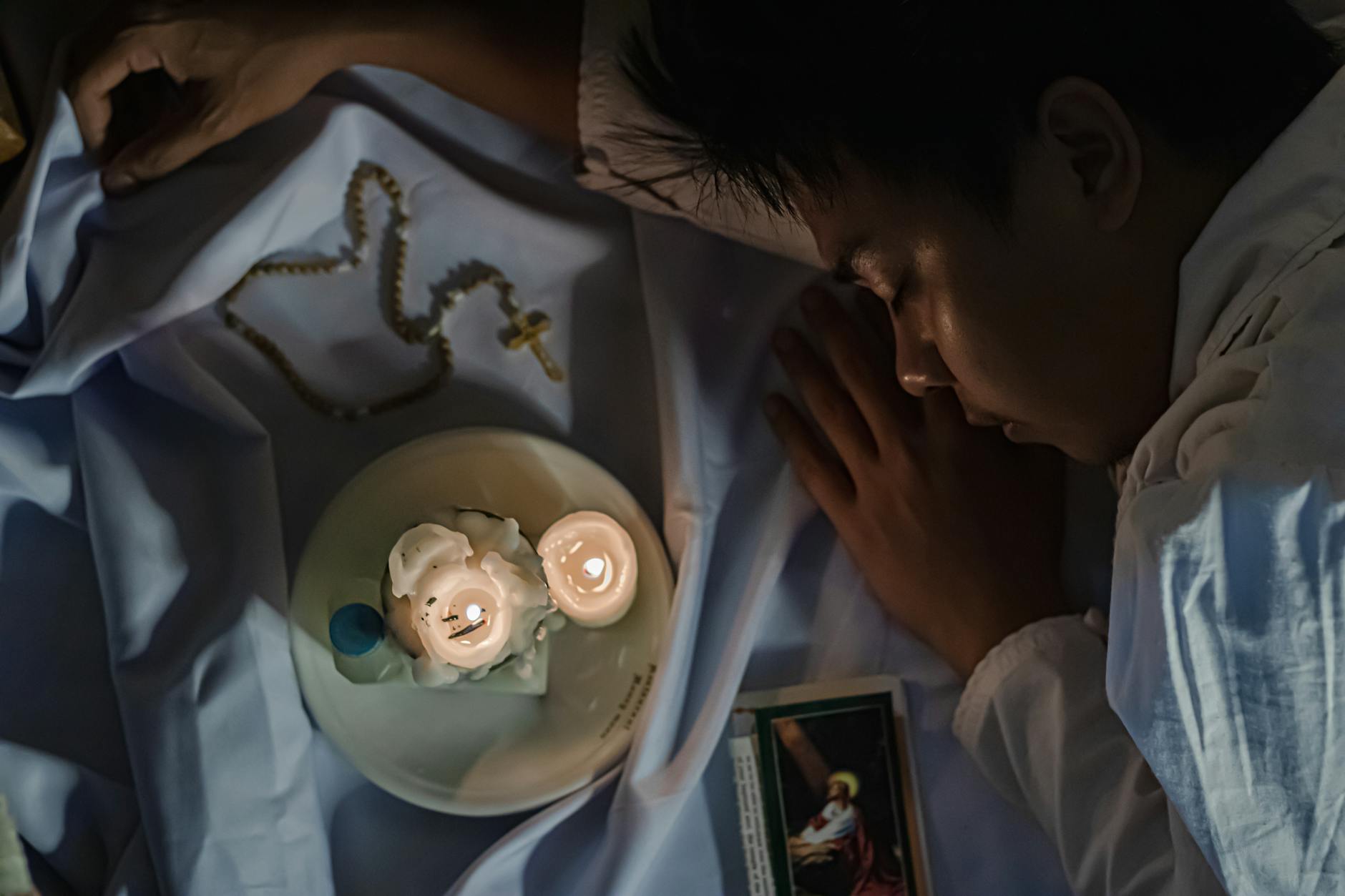
What did people do during this waking period? According to Ekirch's research, practically everything: they prayed, meditated, talked with their bed partners, had sex, tended fires, checked on children, smoked tobacco, interpreted dreams, and — yes — sometimes wrote, read, or thought through problems. Some of the references describe it as the most peaceful, contemplative period of the entire day.
This is real. It's not disputed by serious historians. It's corroborated by literary references from Homer and Virgil through medieval Christian texts to Cervantes and Dickens. The phrase "first sleep" appears so casually in pre-industrial writing that it's clear the concept needed no explanation — everyone knew what it meant.
What the viral post gets WRONG — and it's a lot
Here's where the post goes from "interesting history" to "defamatory fabrication." Almost every specific claim about who changed our sleep and why is either invented, misattributed, or flatly contradicted by the historical record.
"The 8-hour sleep standard was invented in 1938 by Simmons Beautyrest"
False. The "eight hours' rest" concept was coined by Robert Owen, a Welsh labor reformer, in 1817 — over a century before the date in the viral post. Owen's famous slogan was "Eight hours' labour, Eight hours' recreation, Eight hours' rest." It was a workers' rights campaign, not a mattress advertisement. The eight-hour day movement was one of the defining struggles of the 19th-century labor movement, fought for by unions, socialists, and reformers across Europe and the Americas.
Simmons Beautyrest existed and did market mattresses. But they did not invent the concept of 8-hour sleep. The viral post picked a real company and attached a fake origin story to it.
"Dr. Nathaniel Kleitman faked studies funded by the mattress industry"
Defamatory and false. Nathaniel Kleitman (1895–1999) is universally recognized as "the father of modern sleep research." He established the world's first sleep laboratory at the University of Chicago in the 1920s and published his seminal text Sleep and Wakefulness in 1939. His work with Eugene Aserinsky in 1953 led to the discovery of REM sleep — one of the most important findings in 20th-century neuroscience.
His early funding came from the Wander AG company, which made Ovaltine and hoped to market it as a sleep aid. Not a mattress company. And his research was characterized by what colleagues described as "exceptional rigor and conservatism in interpreting results." The peer-reviewed tribute to his career in the Journal of Clinical Sleep Medicine describes decades of meticulous work, not industry-funded fraud.
Calling Kleitman a fraud is not just wrong — it's an insult to one of the most careful scientists of the 20th century, delivered by an anonymous social media post with zero citations.

"Shakespeare wrote most of his plays between 1AM and 3AM"
No evidence. There is no documented source for Shakespeare's specific writing hours. While segmented sleep was indeed common in Elizabethan England — and literary scholar Claude Fretz has written about how the waking period between sleeps may have informed creative work in that era — we simply do not know when Shakespeare personally wrote. The viral post presents a plausible-sounding but entirely invented detail as established fact.
"Mozart composed entire symphonies in what he called 'The God Hours'"
Fabricated quote. Mozart's letters describe late-night composition, but the phrase "The God Hours" does not appear in any documented Mozart correspondence. It was invented for the viral post. Putting fake quotes in the mouths of dead geniuses to make your argument sound more profound is exactly the kind of manipulation the post claims to be exposing.
So what ACTUALLY killed biphasic sleep?
This is the part the viral post could have told you honestly, because the real story is damning enough without the fabrications.
Three forces killed segmented sleep, and none of them were a mattress company:
1. Artificial lighting. Fifty European cities had introduced tax-supported street lighting by 1700, according to History.com's research on sleep origins. Baltimore became the first U.S. city lit by gas in 1816. By the late 19th century, electric light meant that nightfall no longer guaranteed the darkness that had once bracketed human activity. The night became usable — and economically valuable.
2. Factory schedules. The Industrial Revolution didn't just change how people worked — it changed how they slept. A newly formalized workday structured daily life, and "a fascination with productivity meant that spending hours lolling around in the middle of the night was considered slothful." You cannot run a factory on biphasic sleep. This part of the viral post is essentially correct — but the mechanism was economic and cultural, not a conspiracy by a single mattress brand.
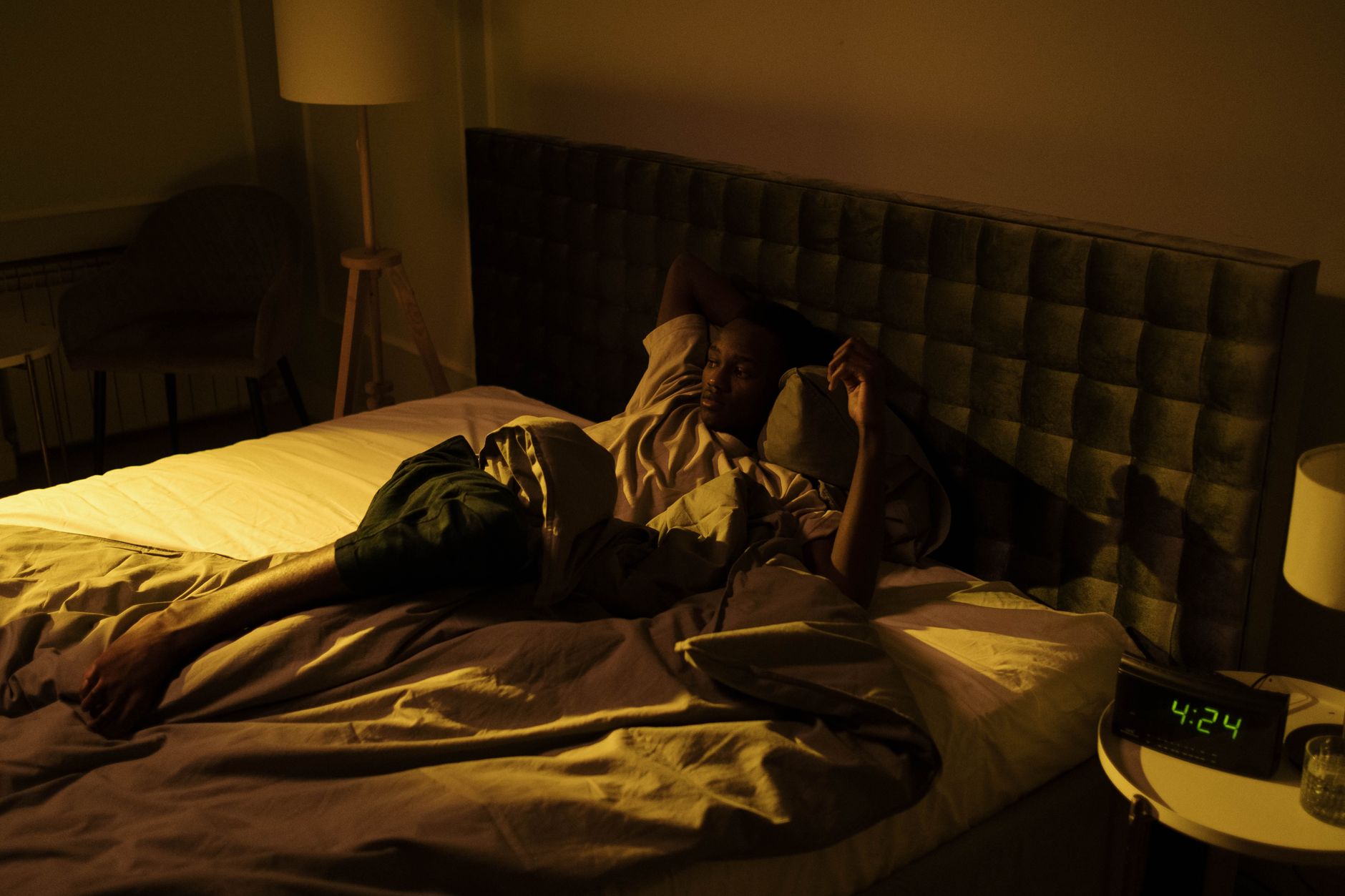
3. The mechanical alarm clock. Levi Hutchins invented the first mechanical alarm clock in 1787 specifically to wake himself for work. Seth E. Thomas mass-produced a popular American version in 1876. The alarm clock is the physical embodiment of the cultural shift: your body's natural rhythm is now subordinate to someone else's schedule.
Is 8 hours even the right number?
Here's where the viral post is onto something real, even if it gets there by lying about the details.
Daniel E. Lieberman, a Harvard evolutionary biologist, has publicly called the rigid 8-hour standard "Industrial Era nonsense." His argument: research on pre-industrial societies (including modern hunter-gatherer communities studied by UCLA's Jerome Siegel) shows that "natural" humans without electricity sleep about 6 to 7 hours, not 8.
Large epidemiological studies back this up. Mortality risk follows a U-shaped curve where the lowest death rates are associated with approximately 7 hours of sleep — not 8. Sleeping less than 6 hours is clearly harmful. But sleeping more than 8-9 hours is also associated with higher mortality, possibly because it's a marker for underlying health conditions.
So the 8-hour target isn't quite "the most dangerous lie in human history." But it is a cultural artifact that became a medical recommendation without sufficient biological basis — and the overcorrection from "you need 8 hours" to "you have insomnia if you wake up at 2 AM" is genuinely worth questioning.
The part nobody talks about
The most interesting finding in Ekirch's research isn't about how long people slept. It's about what happened in the waking period between the two sleeps.
Multiple historical sources describe the hour after midnight as a time of unusual mental clarity. As National Geographic reported, people used this period for prayer, reflection, conversation, and creative thought. Some researchers believe that the transition from deep sleep to wakefulness produces a neurochemical state — elevated melatonin, residual theta-wave activity — that is genuinely conducive to contemplation and insight.
We will probably never know whether this produced Shakespeare's plays or Mozart's symphonies. But the idea that the human brain has a natural window of reflective consciousness that we've systematically suppressed with electric light, factory schedules, and sleep medications is not a conspiracy theory. It's a documented historical reality with plausible neurological mechanisms.
You don't need a fake Kleitman or a fake Simmons Beautyrest to make that point. The truth makes it just fine.
What to actually take from this
- Biphasic sleep is real history. If you wake up in the middle of the night and feel alert for an hour before falling back asleep, you are not broken. You may be experiencing a sleep pattern that was normal for most of human history.
- The 8-hour standard is a cultural norm, not a biological law. Most evidence points to 7 hours as the sweet spot for longevity. Individual needs vary. Rigid adherence to "8 hours or you're unhealthy" is not supported by the best available research.
- The Industrial Revolution genuinely restructured human sleep. This is well-documented and not controversial among historians. The mechanism was economic (factory schedules), technological (artificial light), and cultural (productivity as a moral virtue).
- Nathaniel Kleitman did not fake anything. He discovered REM sleep and spent a career advancing human understanding of consciousness. Slandering him to make a social media post go viral is the opposite of "telling the truth."
- Be suspicious of posts that tell you to "stop medicating your genius." Some people genuinely have sleep disorders that benefit from treatment. A viral post with fabricated citations is not a substitute for a conversation with a doctor who knows your specific situation.
The real scandal isn't that a mattress company invented 8-hour sleep. It's that the Industrial Revolution reprogrammed one of the most fundamental biological rhythms in human experience to serve factory production — and we've spent two centuries calling the old pattern a disease. You don't need fake history to be angry about that. The real history is damning enough.
Sources:
- A. Roger Ekirch — Segmented Sleep research and Harper's essay
- NIH/PMC — Segmented Sleep in Preindustrial Societies
- PMC — Have we lost sleep? Segmented sleep in early modern England
- NIH/PMC — A Tribute to Nathaniel Kleitman
- PMC — Henri Piéron and Nathaniel Kleitman: Two Major Figures of Sleep Research
- History.com — The Modern Origins of the 8-Hour Sleep Cycle
- Fortune — Harvard professor calls out 'lie' of needing 8 hours
- National Geographic — Is sleeping through the night the 'right' way to sleep?
- CNN — How our ancestors used to sleep can help the sleep-deprived today
- Wikipedia — Eight-hour day movement