
Joe Kent Breaks Silence: No Intelligence Showed Iran Nuclear Threat, Israeli Lobby Drove the War
Former counterterrorism director Joe Kent resigned to expose the truth: no intelligence supported claims of an Iranian nuclear threat, the Israeli lobby drove the war, and investigations into Charlie Kirk's murder and the Butler assassination attempt are being blocked.
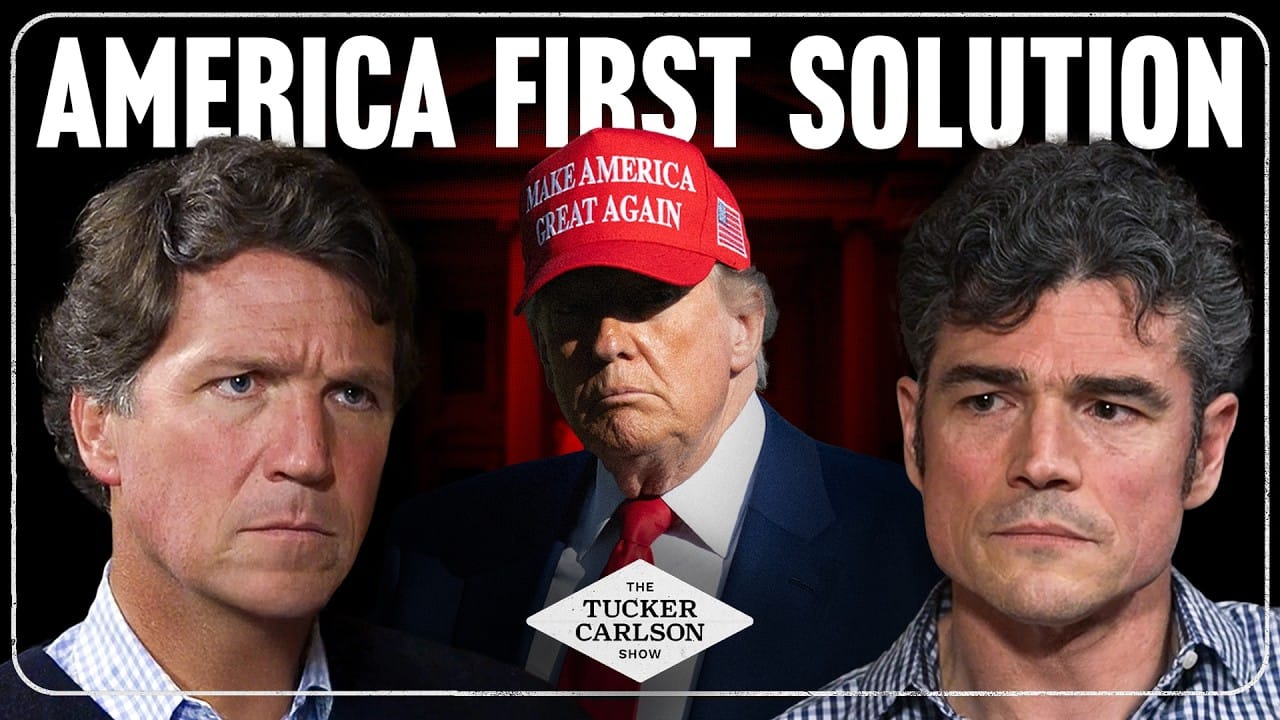
Former National Counterterrorism Center Director Joe Kent resigned in protest over U.S. policy toward Iran, making a rare public warning about the strategic risks of military escalation in his first interview with Tucker Carlson since leaving the administration. His January 2024 prediction — that war with Iran would play into China's hands — has proven eerily accurate. Below is our full analysis of the interview's most critical revelations.
The Prediction That Got Him Fired
In January 2024, months before taking office as counterterrorism director, Kent laid out a devastating strategic assessment on Tucker Carlson's show. His words now read like prophecy:
"If we get deeply involved and deeply entangled with Iran, we are playing right into China's hands, because China would like nothing more than for us to be committing our military endeavors to a war in the Middle East, to a war in Eastern Europe, in Ukraine, and then to be committing our conventional military power, our blood and our treasure, back in the Middle East. That will make the Pacific, our actual border, extremely vulnerable to Chinese aggression. It's absolute insanity. It's opening up Pandora's box. And again, for what gain to the American people?"
Carlson noted the iron law of Washington: "Whenever you have somebody who stands up and says, don't do this, here's what could happen, and then you do it anyway, and it turns out that person was right, your first instinct is not to apologize... but to crush the person who called it correctly." He cited Colonel Stu Scheller, who was jailed for criticizing the Afghanistan withdrawal — not for planning it — as evidence that truth-tellers always pay the price.
The "Imminent Threat" That Wasn't
Kent directly challenged Secretary of State Marco Rubio's justification for the Iran strike. After playing Rubio's statement — that the U.S. struck preemptively because Israel was about to attack Iran and Iranian retaliation would endanger American troops — Carlson observed that the "imminent threat" Rubio described actually came from Israel, not Iran. Kent confirmed: "Exactly."
This distinction matters. As Kent explained, the Iranians weren't planning a sneak attack. They operate on a calculated escalation ladder and were actively negotiating with the Trump administration when Israel forced the issue:
"We could have back-channeled to the Iranians and said, 'If something happens here in the next couple days, it's not us. We're still serious about negotiations and don't want to escalate.' We knew about the Straits of Hormuz and the Houthis' ability to close the Red Sea. These were well-known concerns."
The Nuclear Weapon Myth
Perhaps the most explosive revelation: there was no intelligence supporting claims that Iran was on the verge of building a nuclear weapon. Kent stated flatly that Iran has maintained a religious fatwa against developing nuclear weapons since 2004, and no intelligence indicated it was being violated:
"There was no intelligence indicating an imminent threat — no 'sneak attack' on March 1st or any base. The Iranians are deliberate with the escalation ladder. They only escalate when they believe the regime is threatened."
Kent exposed how the goalposts were systematically moved. The original U.S. position — "Iran cannot have a nuclear weapon" — was quietly replaced with "Iran cannot have any nuclear enrichment," a standard Iran would never accept in negotiations:
"Enrichment became the new U.S. policy. It was laundered through prominent neoconservative types — Mark Levin, Mark Dubowitz, the Foundation for the Defense of Democracies — and high-level engagement with Israeli officials who would say, 'They're enriching, and that will get them closer to a nuclear weapon.'"
Meanwhile, Kent says, classified intelligence showed no such threat. Israeli officials bypassed standard intelligence channels entirely, telling U.S. policymakers directly: "I'm giving you a preview — this isn't in intelligence channels yet, but they're on the cusp of building a bomb."
Who Is Really Driving the War?
Kent drew a sharp line between U.S. and Israeli objectives. While America sought to prevent nuclear proliferation without regime change, Israel actively pursued destabilization. The divergence is fundamental:
"The Israelis are completely fine with Iran slipping into chaos. For us, it's a catastrophe for global energy supplies, the Straits of Hormuz, and our partners in the GCC. Americans want to know why we're going to war and what the end state is."
Kent argued that Israel couldn't pursue its agenda alone — it needed American military power. "Israel could defend itself and conduct limited strikes on its borders. It could carry out impressive targeted assassinations. But what it couldn't do is topple entire governments. It couldn't do something like the Iraq war. It couldn't aggressively destabilize Syria. That's why the Israeli lobby is so potent and so aggressive."
He traced a direct line from the Iraq war through the Syrian civil war to the current Iran crisis, arguing that Netanyahu and the Likud party "heavily lobbied for regime change in Iraq, which led to Shia domination, the rise of ISIS, and fueled the Syrian civil war." The pattern, Kent argues, is unmistakable.
Killing the Ayatollah: The Strategic Blunder
Kent warned that killing Iran's supreme leader was precisely the wrong move if the goal was peaceful regime change. Rather than weakening the regime, it strengthened the most hardline elements:
"Killing the Ayatollah gives the IRGC more power internally. They'll say, 'All you moderates who thought we could negotiate with Americans are chumps. We must fight.' The Iranian people will agree, especially if they're getting bombed by Americans and Israelis."
He pointed out that moderates like Ali Larjani — who was eager to negotiate a deal — have been killed, eliminating exactly the people needed for a diplomatic solution. "The next Ayatollah will be more radical because he has to show the people he'll push back." Kent contrasted this with Trump's earlier approach: killing Qasem Soleimani and his deputy Abu Mahdi al-Muhandis, then stopping — coupling decisive military action with maximum pressure sanctions that got Iranians protesting in the streets against their own regime.
The Charlie Kirk Investigation: Blocked at Every Turn
Kent revealed that his team at the National Counterterrorism Center was blocked from investigating potential foreign ties to the murder of Trump advisor Charlie Kirk. The last time Kent saw Kirk alive was in June, when Kirk said: "Joe, stop us from getting into a war with Iran." Kirk was one of Trump's closest advisors opposing the Iran war.
After Kirk's public assassination, Kent's team found leads suggesting people had prior knowledge of the killing based on online chatter. But the investigation was shut down:
"We were told, 'Hey, you guys need to stop. You can't work on this anymore.' Requests for data sharing just continued to die on the vine, with agencies refusing to fulfill basic requests."
Kent emphasized he wasn't claiming foreign involvement — only that legitimate leads existed and were never pursued. "The FBI said it's a slam dunk case — fingerprints, video evidence. But that doesn't mean we shouldn't ask how he got there or why people had prior knowledge online."
He described a deliberate tactic of information suppression: withhold all information, let conspiracy theories fill the vacuum, then use those theories to discredit anyone asking legitimate questions. "This is how intelligence agencies and law enforcement influence public opinion, elections, and hide their own behavior from the public."
The Butler Assassination Attempt: No Answers
Kent raised similar concerns about the investigation into the Butler, Pennsylvania assassination attempt on Trump. His team's basic questions — like whether shooter Thomas Crooks trained with anyone at his shooting range — were met with hostility. "The FBI's response was hostile and still confuses me," Kent said. Surveillance footage from the shooting range exists but hasn't been released.
Kent also noted the security breaches around Trump: Code Pink protesters somehow knew where the president would be dining and rented a nearby table; an armed off-duty police officer walked right up to shake Trump's hand. "The president is very smart," Kent said. "When he sees issues with his security detail, sees what happened in Butler, and sees what happened with Charlie Kirk, it's reasonable to believe he thinks maybe he doesn't have a choice."
JFK Documents: Still Classified After 63 Years
Kent confirmed that despite Trump's January 23rd executive order calling for total declassification of JFK, MLK, and RFK assassination documents, it hasn't happened:
"Without divulging anything classified — documents from 1963 shouldn't be classified — the whole thing is insane and an insult to citizens. I'm a middle-aged man. I wasn't even born then. It was six years before I was born, and they're telling me I can't see it? It's infuriating and the end of democracy."
He described how the bureaucracy conditions the public to accept delays: "They want to condition us that the president's order requires interagency processes, delays, and checks — even for documents from 1963. They want to control the information flow."
The Blowback Problem
Kent addressed the terrorism risk to Americans from military escalation. He noted that the real threat isn't Iranian sleeper cells but lone actors radicalized by propaganda — the same model seen with Gaza-inspired attacks. "The longer this goes on, the more we'll have to deal with it."
He condemned the hypocrisy of neoconservatives who "advocate for war that stokes religious hatred, then use resulting deaths to censor dissent." And he warned that years of open borders under Biden potentially allowed thousands of suspected terrorists into the country, compounding the risk.
Kent's Solution: What Trump Must Do
Despite the gravity of his warnings, Kent expressed confidence that Trump is "uniquely qualified" to fix the crisis — if he acts decisively. His proposed roadmap:
- Confront Israel directly: "Tell Israel: you're done going on the offense. This is our war. We're paying for it, bleeding for it. If you continue, we're out."
- Engage Gulf allies: Work with the Emiratis, Qataris, Saudis, Bahrainis, and Omanis to broker negotiations.
- Negotiate with Iran: Open the Straits of Hormuz, stop the killing, rebuild the energy sector.
- Lift sanctions strategically: Condition it on Iran settling oil transactions in dollars, not yuan — preserving the petrodollar and preventing dollar collapse.
"Lies beget lies, and they like cancer destroy the body in which they live. If you care about this country, if you're from here and you hope to live here and have grandchildren here, you have to fix that. Telling the truth — radically telling the truth — is the only thing that gets you there."
This analysis is based on the full two-hour interview between Tucker Carlson and Joe Kent, aired March 2026. Joe Kent served 20 years in the U.S. Army with 11 combat missions, including service with the 75th Ranger Regiment and Army Special Forces. He resigned as Director of the National Counterterrorism Center in protest of U.S. policy toward Iran.