
The 12,800-Year Cycle: Why the CIA Classified the Adam & Eve Story and What It Reveals About Our Forgotten Past
New evidence connects Chan Thomas's classified Adam & Eve Story to the Younger Dryas impact 12,800 years ago. From Baffin Bay cores to Göbekli Tepe and Alexander Thom's megalithic yard research, a pattern emerges of cyclical civilization-ending cataclysms.
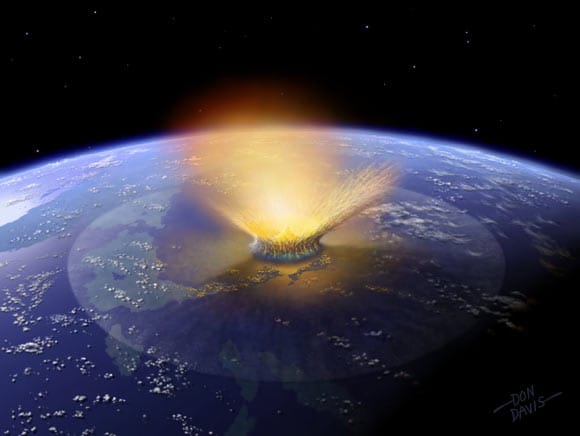
Twelve thousand eight hundred years ago, something hit us. The evidence is buried in Baffin Bay sediment cores, etched into stone pillars at Göbekli Tepe, and encoded in a 284-page manuscript the CIA deemed too dangerous to fully release. Chauncey "Chan" Thomas called it the cycle of cataclysm—a periodic crustal displacement that wipes civilizations from memory. What he knew, what the science now confirms, and what remains classified tells a story the establishment isn't ready for you to hear.
The Baffin Bay Discovery—and Its Suppression
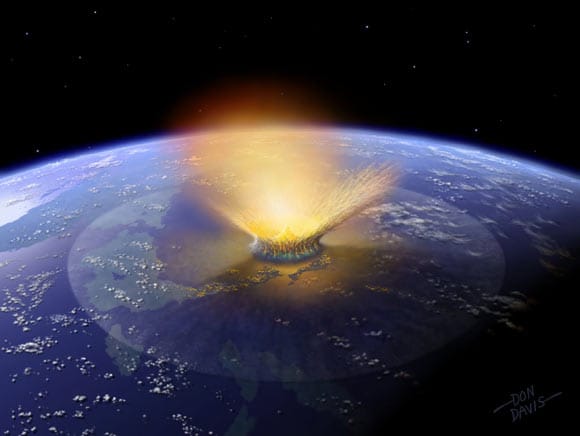
In August 2025, a team of researchers led by Christopher R. Moore published what appeared to be definitive proof of the Younger Dryas impact event. Their paper in PLOS ONE analyzed four marine sediment cores from the seafloor between western Greenland and northeastern Canada.¹
The findings were explosive. The team identified cometary dust signatures, microspherule concentrations indicating high-temperature cosmic impact, platinum anomalies consistent with extraterrestrial origin, and chronological alignment with the Younger Dryas onset.¹
Then, on February 11, 2026, PLOS ONE retracted the paper. The retraction notice cited "concerns regarding referencing, methodology, and data reporting."² Specifically:
- "Incorrect citations following an issue with the DOI information provided by the authors, raising concerns about undisclosed use of AI tools"²
- Misidentification of marine foraminifera as "spherule fragments"²
- Chronological calibration errors that placed dates "outside the Younger Dryas" when properly calculated²
Notably, eight authors—including Allen West and James Kennett of the Comet Research Group—did not agree with the retraction.² The pattern is familiar: evidence emerges, then methodological critiques appear, then the paper vanishes.
The Younger Dryas Boundary: A Global Signature
What cannot be retracted is the growing body of physical evidence at the Younger Dryas boundary (YDB)—a distinct geological layer dating to approximately 12,800 years before present.³
North America: The Clovis-age Murray Springs site in Arizona shows a carbon-rich "black mat" layer with magnetic microspherules, iridium, and nanodiamonds. At Abu Hureyra in Syria, archaeologists found meltglass indicating temperatures exceeding 2,200°C.⁴
South Africa: Francis Thackeray's team identified platinum spikes in the Wonderkrater sediment core, correlating precisely with the Younger Dryas onset.⁵
Greenland: Ice cores from the NGRIP site show platinum and iridium anomalies at the Younger Dryas transition.⁶
The synchronous global distribution of these markers suggests a single catastrophic event—or cluster of events—that affected the entire planet simultaneously.
Göbekli Tepe and Karahan Tepe: The Warning System
In southeastern Turkey, two sites challenge everything archaeology thought it knew about early civilization.
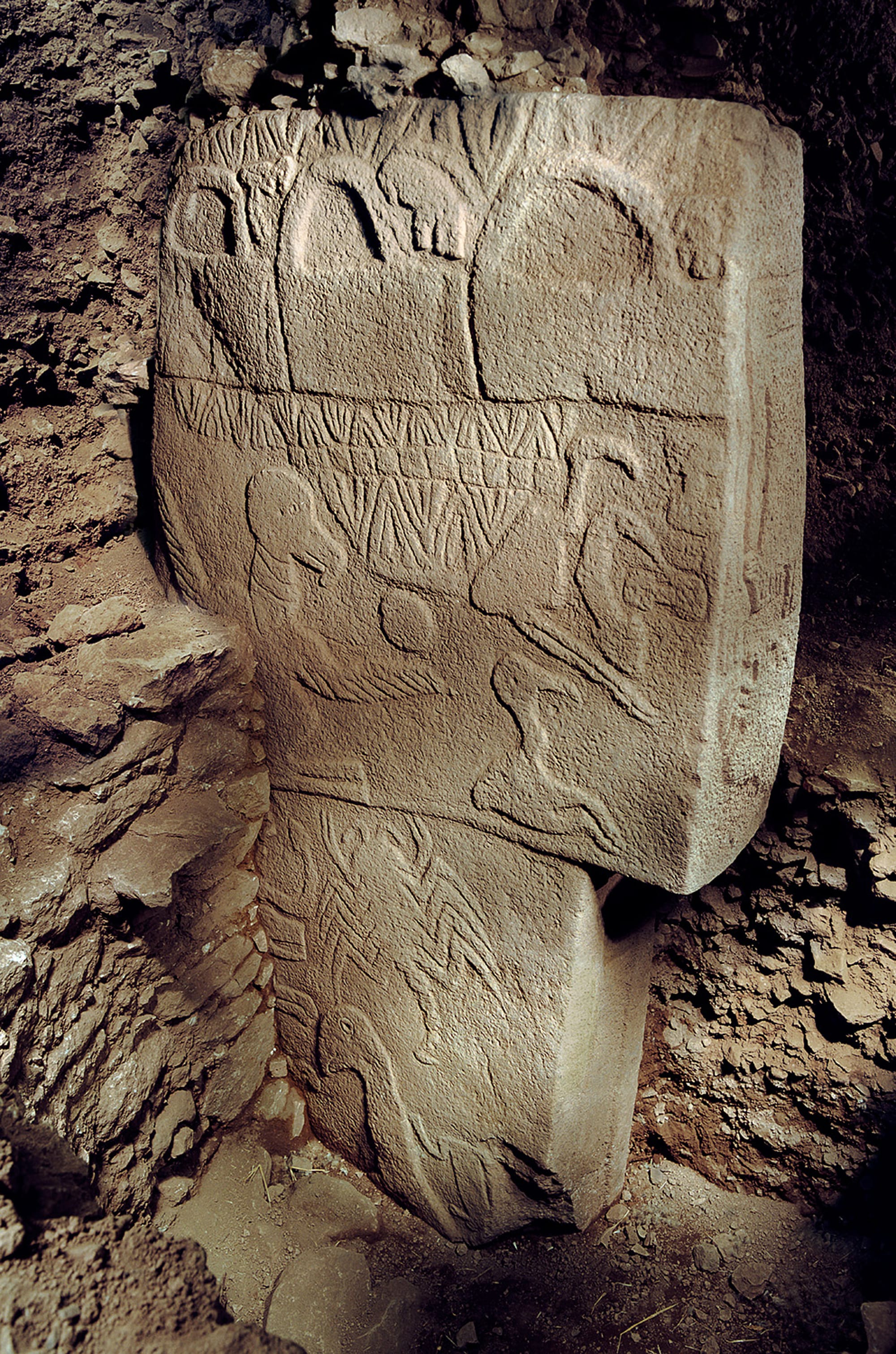
Göbekli Tepe, excavated since 1995, consists of massive T-shaped stone pillars arranged in circular enclosures. The pillars—some weighing 50 tons—are carved with intricate animal reliefs. Radiocarbon dating places construction between 9,500 and 8,000 BCE.⁷
The Vulture Stone (Pillar 43) has attracted particular attention. A 2017 University of Edinburgh study used computer simulations to match the stone's animal carvings to constellations as they appeared 13,000 years ago. Their analysis suggests the symbols encode a specific date: 10,950 BCE—within 250 years of the Younger Dryas onset. A headless human figure on the pillar suggests the carvers recorded mass death from above.⁸
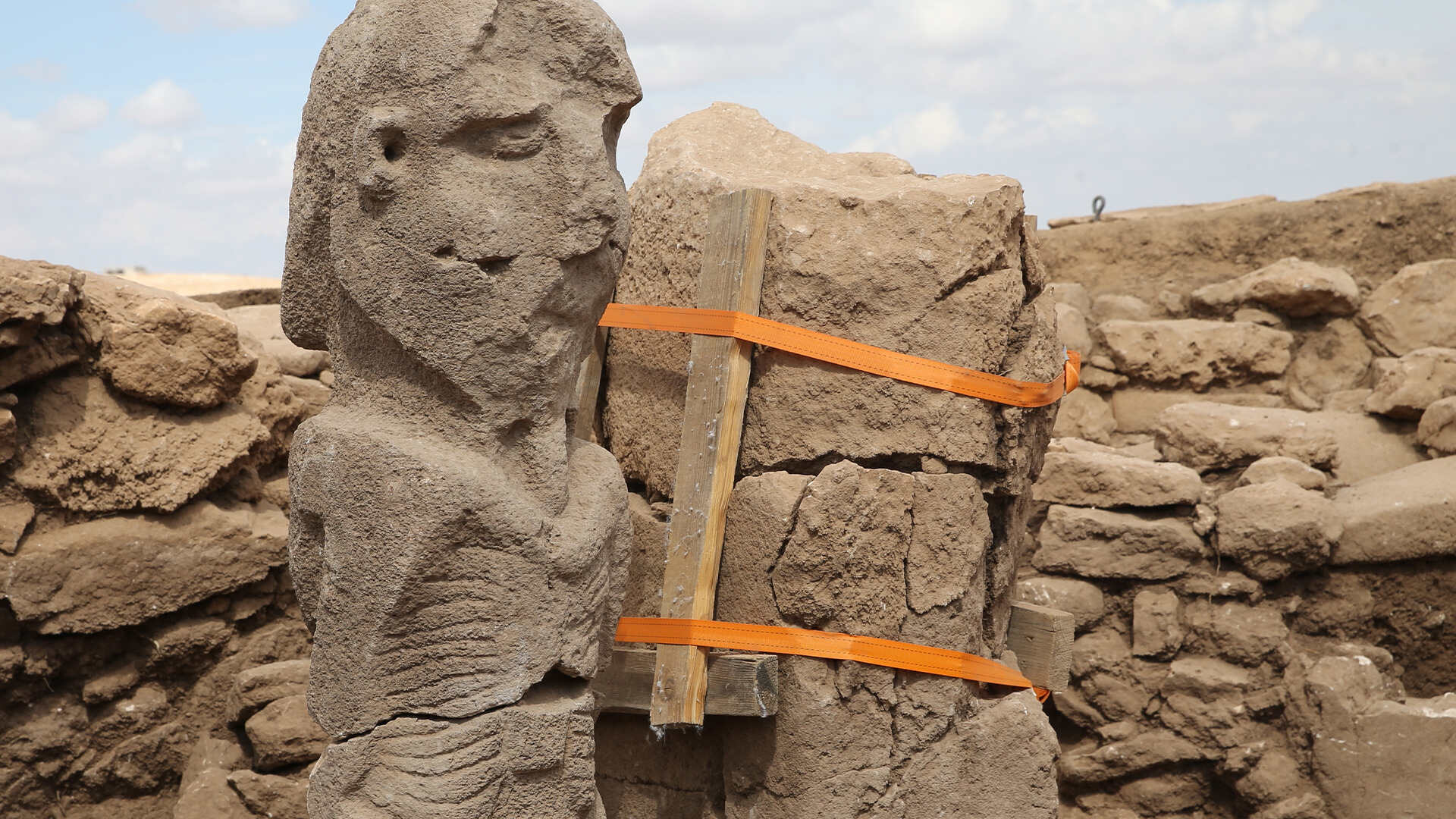
Karahan Tepe, located 35 kilometers southeast, appears older. Excavations led by Professor Necmi Karul have uncovered 250+ T-shaped obelisks and a 2.3-meter anthropomorphic statue. The Turkish Ministry of Culture estimates occupation between 10,000 and 9,500 BCE.⁹
The Megalithic Yard: Evidence of a Global Standard
If isolated hunter-gatherers built Göbekli Tepe, why does its architecture share mathematical properties with monuments thousands of miles away?
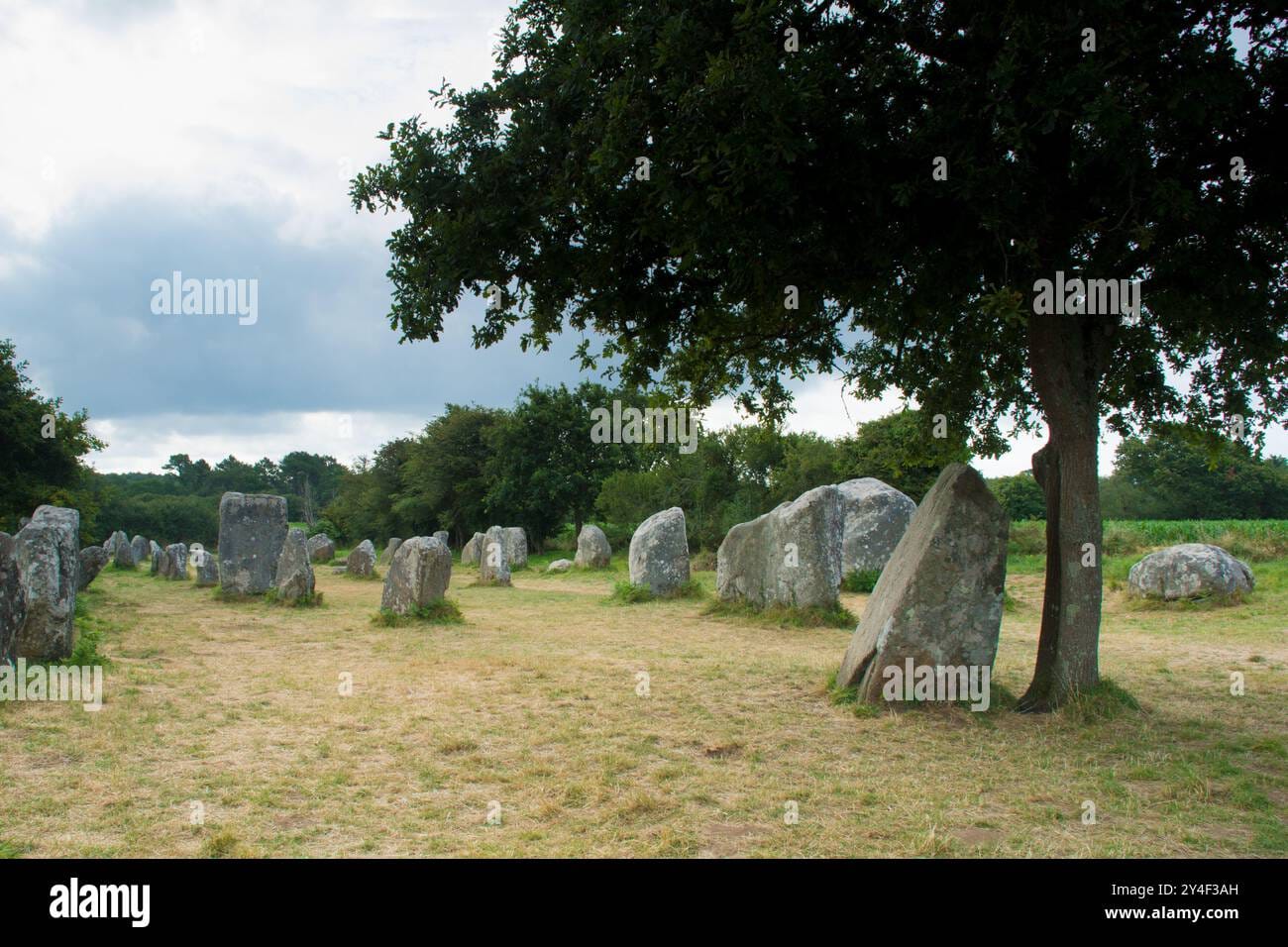
Alexander Thom (1894–1985), Professor Emeritus of Engineering at Oxford, surveyed over 600 megalithic sites across Britain, Ireland, Scotland, Wales, and Brittany. His measurements revealed a standardized unit: the Megalithic Yard (MY)—2.72 feet (0.829 meters).¹⁰
Thom also identified the Megalithic Rod (2.5 MY) and showed that many sites employed geometric planning based on right triangles, Pythagorean triples, and astronomical alignments.¹⁰
Similar standardized units appear worldwide. The Indus Valley civilization used a unit remarkably close to Thom's sub-units. The ancient Egyptian remen (approximately 0.83 meters) matches the Megalithic Yard almost exactly. Either humanity independently discovered the same ratios across unconnected continents—or a common source transmitted this knowledge before recorded history began.
Chan Thomas and the Cycle of Cataclysm
In 1963, aerospace engineer Chauncey Powers "Chan" Thomas (1920–1998) published The Adam and Eve Story: The History of Cataclysms. The book argued that Earth experiences periodic, civilization-destroying catastrophes every 7,000–12,000 years caused by pole shifts—sudden crustal displacements triggered by solar electromagnetic disturbances.¹¹
Thomas placed the most recent cataclysm approximately 11,500 years ago—within centuries of the Younger Dryas onset.¹¹
The CIA Classification
The CIA acquired Thomas's book and classified it as Document RDP79B00752A000300070001-8. The declassified version—released in 2013 after 50 years—bears the marking "Declassified in Part - Sanitized Copy Approved for Release." The document contains approximately 57 pages.¹²
Sources claim Thomas's original manuscript contained 284 pages. If accurate, only 20% of the book was declassified. What happened to the rest?¹²
Analysis reveals two likely reasons for classification:
1. Technical Defense Information: Thomas worked on missile guidance systems for Bell Aircraft and the RASCAL program. The declassified text includes detailed technical descriptions classified in 1963.¹²
2. Predictive Cataclysm Timeline: Thomas claimed the next cycle would occur between 2000–2500 CE—our present century.¹¹
The CIA has never explained what was removed or why.¹²
The Hapgood Connection: Einstein's Endorsement
Thomas didn't invent crustal displacement theory. That credit belongs to Charles Hapgood (1904–1982), whose 1958 book Earth's Shifting Crust included a foreword by Albert Einstein.¹³
Einstein wrote:¹³
"I frequently receive communications from people who wish to consult me concerning their unpublished ideas. It goes without saying that these ideas are very seldom possessed of scientific validity... In this case, however, the author has done a very impressive job... His idea is original, of great simplicity, and—if it continues to prove itself—of great importance to everything that is related to the history of the earth's surface."
The U.S. Air Force's Cambridge Research Laboratories funded Hapgood's research through the 1950s. When military funding flows to fringe geological theories, questions arise about classified intelligence supporting what public science rejects.¹³
Connecting the Threads
The evidence converges on a disturbing timeline:
~12,800 years ago: The Younger Dryas begins abruptly. Nanodiamonds, platinum, and meltglass mark a cosmic impact event.³
~11,500–9,500 years ago: Survivors at Göbekli Tepe and Karahan Tepe build monumental warning systems with advanced measurement systems and astronomical knowledge.⁷⁹
~5,000–3,000 years ago: Megalithic builders across Britain and Brittany use standardized units and geometric planning.¹⁰
1963: Chan Thomas publishes his warning. The CIA classifies it.¹¹¹²
2013: Partial declassification reveals cataclysm timing predictions for our current century.¹²
2025–2026: Baffin Bay evidence emerges, then is retracted.¹²
What the CIA Isn't Saying
If crustal displacement is impossible, why classify Thomas's book at all? If it's possible, why release only fragments?¹²
The partial declassification serves a dual purpose: it satisfies FOIA requirements while ensuring the most sensitive material remains hidden.
The Warning in Stone
Göbekli Tepe's builders buried their temple deliberately—filled it with debris and abandoned it around 8,000 BCE.⁷
The Vulture Stone survived 13,000 years. Its message, if correctly interpreted, warns that the sky sometimes falls, that cycles repeat, and that the intervals between catastrophes are long enough to breed complacency but short enough to demand vigilance.⁸
Chan Thomas believed the next cycle approaches. The Younger Dryas event occurred 12,800 years ago. Thomas's cycle predicts recurrence every 7,000–12,000 years. We are in the window.¹¹
The question isn't whether the establishment believes in catastrophe. The question is whether they'll tell the rest of us before it's too late.
Sources
- Moore, C.R., et al. (2025). "A 12,800-year-old layer with cometary dust, microspherules, and platinum anomaly recorded in multiple cores from Baffin Bay." PLOS ONE, 20(8). [RETRACTED Feb 2026]
- The PLOS ONE Editors. (2026). "Retraction notice." PLOS ONE, 21(2), e0342613.
- Firestone, R.B., et al. (2007). "Evidence for an extraterrestrial impact 12,900 years ago." PNAS, 104(41), 16016-16021.
- Moore, C.R., et al. (2020). "Evidence of cosmic impact at Abu Hureyra, Syria." Scientific Reports, 10, 4185.
- Thackeray, J.F., et al. (2019). "The Younger Dryas interval at Wonderkrater." Palaeontologia Africana, 54, 31-36.
- Petaev, M.I., et al. (2013). "Large Pt anomaly in the Greenland ice core." PNAS, 110(32), 12917-12920.
- Schmidt, K. (2010). "Göbekli Tepe—the Stone Age sanctuaries." Documenta Praehistorica, 37, 239-256.
- Sweatman, M.B. & Tsikritsis, D. (2017). "Decoding Göbekli Tepe with archaeoastronomy." Mediterranean Archaeology and Archaeometry, 17(1), 233-250.
- Karul, N. (2021). "Buried Buildings at Pre-Pottery Neolithic Karahantepe." Türk Arkeoloji ve Etnografya Dergisi, 86, 22-35.
- Thom, A. (1967). Megalithic Sites in Britain. Oxford University Press.
- Thomas, C.P. (1963). The Adam and Eve Story: The History of Cataclysms. Emerson House.
- Central Intelligence Agency. (2013). "CIA-RDP79B00752A000300070001-8." CREST Database.
- Hapgood, C.H. (1958). Earth's Shifting Crust. Pantheon Books. [Foreword by Albert Einstein]
- OompaVille. "The 12,800 Year Cycle." YouTube. https://www.youtube.com/watch?v=cW-Lfefrew4