Iran War 2026: How 'Self-Defense' Became the Magic Word That Started a War
A one-day ceasefire, a 'self-defense' strike on Qeshm Island, and missiles over Kuwait International Airport. When every side calls its attack defensive, who really started the 2026 Iran war — and who benefits from a closed Strait of Hormuz?
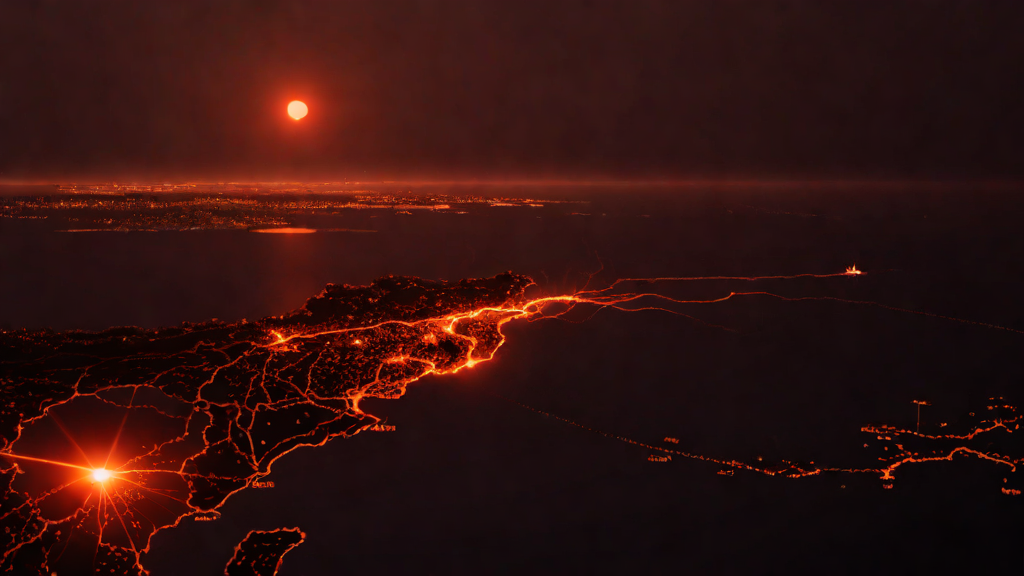
In the space of a single news cycle, the Middle East went from a "newly negotiated ceasefire" to ballistic missiles falling on Kuwait International Airport. One person is dead. Sixty-three are wounded. And every party to the bloodshed is using the same word to describe what they did: self-defense.
That word is doing an enormous amount of work right now. So before the narrative hardens into the version you'll be repeating at the dinner table, let's slow down and ask the question they'd rather you didn't: who actually threw the first punch in the 2026 Iran war — and why does every airstrike keep getting filed under "defensive"?
The "self-defense" strike that wasn't on anyone's radar
According to the public record, the latest escalation began with a U.S. strike on Qeshm Island — an Iranian island commanding the northern shore of the Strait of Hormuz, the chokepoint through which roughly a fifth of the world's oil moves. Washington labeled the strike "self-defense."
Here's the sleight of hand worth noticing. "Self-defense" is a legal and moral trump card. Say it loudly enough and the conversation stops: you don't have to explain what provoked the strike, what intelligence justified it, or who signed off. The word is designed to end the inquiry, not begin it. And in a region where a "defensive" action on a strategic island is indistinguishable from a first strike, the label is the entire game.

Iran's response was immediate and brutal: missiles and drones aimed at U.S. bases in Kuwait and Bahrain, a strike on a vessel near the Strait of Hormuz, and the airport attack that killed an Indian national and wounded more than 60. Kuwaiti forces say they intercepted 13 missiles and 17 drones. Tehran, naturally, also called its attacks a response — self-defense by another name.
So now we have two nuclear-adjacent adversaries, both claiming to be the victim, both "defending themselves" by launching the projectiles. When everyone is defending, no one is the aggressor — which is exactly the fog that lets a war keep expanding while the public is told it's all reactive.
A ceasefire that lasted a headline
The detail that should be setting off alarms is the timeline. This explosion of violence didn't happen in a vacuum — it happened on top of a "newly negotiated ceasefire." Within the same window, Israel accused Hezbollah of breaching it with drones and missiles, while Israeli airstrikes hit multiple Lebanese districts, killing at least four people near a hospital in Tyre.
Ask yourself: what is a ceasefire worth if it collapses faster than it can be reported? Either the agreement was never meant to hold — a press release dressed up as diplomacy — or someone needed it to fail. A ceasefire that exists just long enough to be announced and then broken serves a very specific purpose: it lets every side say "we wanted peace, they shattered it." It manufactures the moral high ground on demand.
Watch the chokepoint, watch the language
Tehran is now threatening to "completely block" the Strait of Hormuz and to menace the Strait of Mandeb as well. Translate that out of headline-speak and it means a deliberate strangulation of global oil flow — the kind of move that sends prices, and political tempers, vertical. Meanwhile we're told the U.S. President personally called off a strike on Beirut, a tidy bit of "restraint" messaging dropped into the same news cycle as missiles hitting an airport.
None of this means the underlying events aren't real. They are. People are dying. What we're flagging is the packaging: the relentless framing of offensive escalation as defensive necessity, the disposable ceasefire, the perfectly-timed "I told them to stand down" leak. These are the tells of a narrative being managed in real time.
The questions they're not answering
- What specific, verifiable threat justified a "self-defense" strike on Qeshm Island — and who has actually seen that intelligence?
- Who brokered the ceasefire that collapsed within a news cycle, and did any party have an interest in it failing?
- Why is the same word — "self-defense" — accepted from Washington but dismissed as propaganda when Tehran uses it, and vice versa?
- Who profits from a closed Strait of Hormuz? Follow the oil futures, not the press conferences.
We're not telling you who the villain is. We're telling you that when every actor reaches for the identical magic word on the same day, the word stops being information and becomes cover. Keep your eye on the chokepoint. And the next time a strike is announced as "self-defense," remember to ask the only question that matters: defense against what, exactly — and who decided you didn't need to know?
Sources
- Wikipedia — Portal:Current events, June 2026
- CNN — Iran war live updates: Kuwait's airport attacked as fresh Iran-US strikes strain ceasefire
- GoLocalProv — 5 Big News Stories Overnight, June 3, 2026
- Democracy Now! — Headlines for June 2, 2026
They Tell Us Lies publishes commentary and analysis. We connect dots the mainstream leaves disconnected — and we cite our sources so you can check our work and draw your own conclusions.